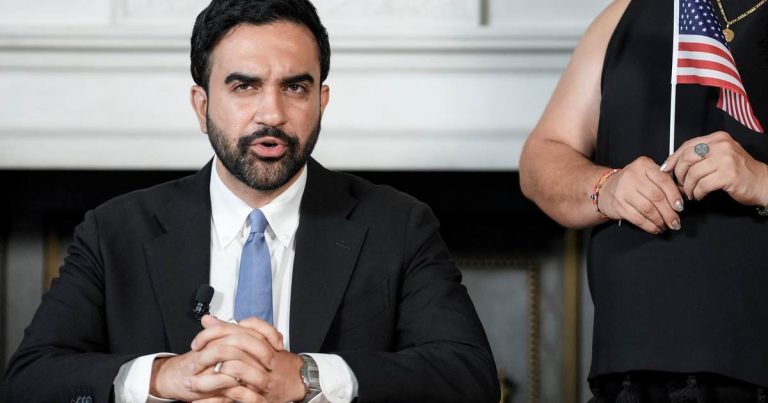
New York City Mayor Zohran Mamdani wants stronger protections for delivery workers, but a dispute with Amazon is putting the potential cost to customers front and center. Mamdani’s delivery bill would require delivery drivers to be employed by companies like Amazon rather than work as gig workers, according to HotAir. Amazon has warned that the change would end free deliveries. Mamdani, meanwhile, says any added charge would be corporate greed, not a necessary result of worker protections. The clash raises an uncomfortable question for an affordability agenda: Who ultimately pays when government requires businesses to spend more?
The delivery fight comes as Mamdani and his allies push Gov. Kathy Hochul to support broader tax increases on wealthy New Yorkers. Those are distinct policy battles, not interchangeable measures: An employment requirement is not an income tax. But they share a political challenge. Promising to make wealthy people or large companies pay is easier than guaranteeing that ordinary households will never feel the effects. HotAir columnist Ed Morrissey argues that the Amazon dispute exposes that weakness, with customers potentially facing a visible charge rather than an abstract debate about corporate obligations.
Mamdani’s Delivery Bill Meets Amazon’s Cost Warning
The proposal’s stated purpose, as presented by its supporters, is to protect workers and improve street safety. Its central mechanism would change the employment relationship between delivery drivers and the companies involved. That makes the dispute more specific than a general argument over whether Amazon should contribute more. The question is what that employment requirement would cost, how Amazon would respond, and what customers would pay. The account does not establish a final implementation schedule or show that the proposed delivery charge has already taken effect, so the distinction between a warning and an existing fee matters.
The customer-facing side of the fight surfaced when Emma G. Fitzsimmons posted about receiving an Amazon message while ordering a liquid multivitamin for her child. HotAir presented that post as an example of Amazon warning shoppers about the consequences of the proposal. A message delivered during a purchase puts the argument in practical terms for customers. Instead of hearing competing promises from City Hall and a corporation, shoppers are being asked to consider a possible change to their own orders. That gives Amazon’s position visibility, but it does not independently establish that its proposed charge is unavoidable.
The Mayor Calls It Greed, Not a Policy Cost
Mamdani answered by pointing to Amazon’s size and rejecting its explanation. He wrote: “Amazon is a multi-trillion dollar company. If Jeff Bezos adds $5 to your order, it’s not because of City Council’s efforts to protect workers’ rights and keep our streets safe. It’s greed. Pass the Delivery Protection Act.” His response frames the potential charge as a corporate choice, not a necessary consequence of the legislation. It also makes clear that he wants the council to move forward despite the warning. That is a political argument about responsibility, not a detailed accounting of the bill’s costs.
Amazon is a multi-trillion dollar company. If Jeff Bezos adds $5 to your order, it’s not because of City Council's efforts to protect workers' rights and keep our streets safe. It's greed.
Pass the Delivery Protection Act. https://t.co/dpcy5Refw0
— Mayor Zohran Kwame Mamdani (@NYCMayor) November 19, 2026
Morrissey takes the opposite position, arguing that higher business costs will reach consumers through fees or higher prices. His strongest point is that lawmakers cannot simply declare customers insulated from the costs of their policies. Still, the existence of a new requirement does not, by itself, prove that any particular charge is the only possible response. Amazon’s warning and Mamdani’s accusation should both be treated as arguments from interested parties. A serious affordability debate needs more than the mayor saying the company can afford it and the company saying shoppers must pay.
Hochul Faces a Broader Tax-and-Spending Push
The larger fight runs through Albany, where Mamdani and his allies want Hochul to support higher taxes. According to Politico’s reporting quoted by HotAir, advocates plan demonstrations around the state and hope to capitalize on a growing socialist presence in the Democratic-dominated Legislature. Their strongest shared policy argument is expanding free child care, a goal Hochul also supports. That creates an opening for negotiations without guaranteeing agreement on Mamdani’s preferred approach. Hochul has indicated openness to a tax deal on her own terms, rather than embracing the broader income tax increases he wants.
There is already an example of that narrower approach: Hochul agreed to a surcharge on expensive second homes. Politico described the agreement as allowing Mamdani to claim a tax-the-rich victory without winning his broader income tax agenda. The distinction matters because agreement on a specific surcharge does not mean agreement on every proposed increase. It also shows why the child care promise is central to the coming pressure campaign. Advocates are linking the revenue argument to something Hochul wants to deliver, rather than relying solely on demands that wealthy residents pay more.
The delivery dispute tests the same affordability message from a different direction. Worker protections and child care are the benefits supporters emphasize; household costs and funding choices are the questions those promises must survive. Mamdani can argue that Amazon should absorb additional expenses, but he cannot settle the practical outcome by calling a potential charge greed. Amazon, likewise, should not have its cost claims accepted without scrutiny. For New Yorkers, the meaningful test is whether the promised improvements arrive without making everyday purchases harder to afford, not which side wins the exchange online.
Source: HotAir