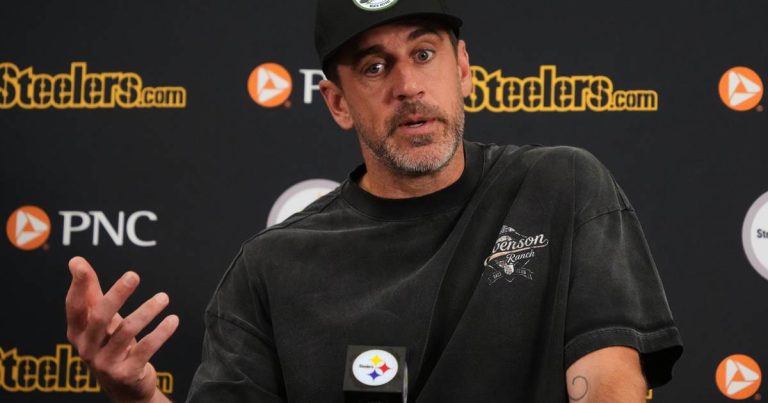
Aaron Rodgers has put Steelers coach Mike McCarthy on the defensive with public allegations about communication and team preparation, according to PJ Media. During an appearance on The Pat McAfee Show, Rodgers said he learned about his benching from a teammate rather than his coaches. He also accused McCarthy of falling asleep in meetings, missing walkthroughs and not watching film. Those are allegations from Rodgers, not independently established findings. Still, their specificity gives McCarthy a more difficult public-relations problem than a routine disagreement over who should start at quarterback.
PJ Media columnist Scott Pinsker presents the dispute as a lesson for Republicans about controlling a public argument. His central point is that effective communication requires both offense and defense: knowing when to make a case and when to answer a damaging one. The football controversy illustrates how quickly an internal decision can become a broader argument about leadership. A coach can defend changing quarterbacks on performance grounds. Answering detailed accusations about preparation and communication is a different challenge, particularly when those accusations come from the player being replaced.
Aaron Rodgers Describes a Breakdown in Communication
According to the account PJ Media published, Pittsburgh had lost its last two games when McCarthy said Monday that Rodgers would remain the starter. By Tuesday night, the team had announced a different arrangement. Rodgers, though healthy, would be inactive for Friday’s game against the Denver Broncos, with Mason Rudolph starting instead. That sequence establishes the central change described in the article: a public assurance followed by a benching. It does not, by itself, explain why the decision changed or what conversations occurred inside the organization.
Rodgers supplied his own account of those conversations during his Wednesday appearance on McAfee’s show. He said he had spoken with McCarthy several times over the preceding week without being told he would be benched. According to Rodgers, tight end Pat Freiermuth ultimately delivered the news. If accurate, that account raises a straightforward leadership question about why a player would learn such a consequential decision from a teammate. The criticism is about how the decision was communicated, not proof that the decision to start Rudolph was wrong.
Specific Accusations Create a Tougher Response
Rodgers went beyond describing disappointment over his role. He alleged that McCarthy fell asleep during team meetings, missed walkthroughs and failed to watch film. He also said the coach broke down the team at halftime by saying, “1-2-3 Packers” in the locker room. These claims concern conduct that other people could potentially have witnessed, which makes them different from a vague complaint about poor chemistry. But the possibility of corroboration is not the same as corroboration itself, and each allegation still requires its own assessment.
Pinsker argues that Rodgers’ calm delivery and specific details made the accusations especially effective. He also writes that nothing Rodgers claimed had been discredited at the time of his column. That is the columnist’s assessment, not a substitute for a documented response to each charge. An accusation does not become established fact simply because an immediate rebuttal is absent. The strongest version of this communications lesson therefore depends on accuracy as much as presentation: details make a claim easier to examine, not automatically true.
The column also points to renewed attention on McCarthy’s older remarks and public appearances. Pinsker describes that scrutiny as a consequence of Rodgers giving audiences a framework through which to interpret the coach’s behavior. Once an allegation takes hold, even an ordinary moment can be treated as supporting evidence. That may explain how a reputation becomes harder to defend, but it also exposes a weakness in public judgment. An old joke or a sideline expression cannot, on its own, establish whether a specific allegation is accurate.
The GOP Lesson Requires More Than Going on Offense
For Republicans, the useful takeaway is narrower than simply learning to attack harder. A clear chronology and concrete examples give an audience something it can understand and evaluate. General complaints about unfair treatment rarely offer the same clarity. Yet a political communicator who borrows Rodgers’ approach also inherits the obligation to get the details right. A memorable charge can command attention, but attention alone does not establish credibility or justify every conclusion drawn from it.
There is a defensive lesson here as well: answer the substantive issue rather than assuming the controversy will stay confined to the original decision. In this case, the quarterback change and Rodgers’ allegations about McCarthy’s conduct are separate questions. Defending the lineup choice would not necessarily answer the complaints about communication or preparation. Conversely, proving an accusation wrong would not automatically settle every other allegation. The lasting test is whether the claims withstand scrutiny, not whether either side wins the loudest round of publicity.
Source: PJ Media
This soundbite always felt bigger than it was at the time. Cushioned as a joke…foreshadowing.
Ed Werder asks Mike McCarthy about him saying he watched all the film from 2019 before the hire in Dallas…the answer pic.twitter.com/Z3Quj4XDwt
— Jane Slater (@SlaterNFL) November 25, 2026


Sound off
Join the conversation
Be the first to comment.
Load more comments