Republicans looking for an explanation for GOP midterm losses have a turnout problem to confront. A J.L. Partners poll, first reported by the New York Post and discussed by RedState, found that 35 percent of President Donald Trump’s 2024 voters stayed home during the midterms, compared with 22 percent of Kamala Harris voters. That finding challenges the argument that defections to Democrats were the main cause of the Republican defeat. Some Trump voters did switch sides, according to the poll. But its findings point more heavily toward supporters who never cast a ballot.
The distinction matters because different failures call for different repairs. Winning back someone who voted for the opposing party is not the same task as persuading an existing supporter that a congressional election deserves their attention. According to the findings, only eight percent of Trump’s voters crossed party lines to support Democratic candidates. RedState reported that Republicans still would have lost control of both the House and Senate even without those defections. That leaves party leaders with an uncomfortable conclusion: stopping voters from switching sides would not, by itself, have saved their majorities.
GOP Midterm Losses Put Turnout in the Spotlight
The poll attributed a 15-point national swing toward Democrats between 2024 and 2026 largely to differences in participation. Of that shift, 10 points were attributed to turnout and five points to voters switching parties. Those figures do not make defections irrelevant, but they place them behind turnout in this explanation of the result. Republicans therefore have reason to examine both problems without treating them as equally responsible. A strategy built entirely around persuading defectors would miss the larger share of the swing identified by the poll.
The breakdown among Trump’s 2024 supporters makes the participation problem more specific. According to the poll, 46 percent of those without college degrees, 44 percent of those over age 65, and 39 percent of rural voters did not vote in the midterms. Those findings give Republicans a clearer starting point than a broad complaint about enthusiasm. They also raise questions about whether the party gave these supporters a compelling reason to participate. The figures describe who stayed home, however, not a complete explanation of why each group did so.
New ‘Blue Tsunami’ election poll offers Republicans hope for a 2028 comeback https://t.co/XnkCaJN16q pic.twitter.com/Ixy2CA03jo
— New York Post (@nypost) November 16, 2026
Vance and Cruz Offered a Different Diagnosis
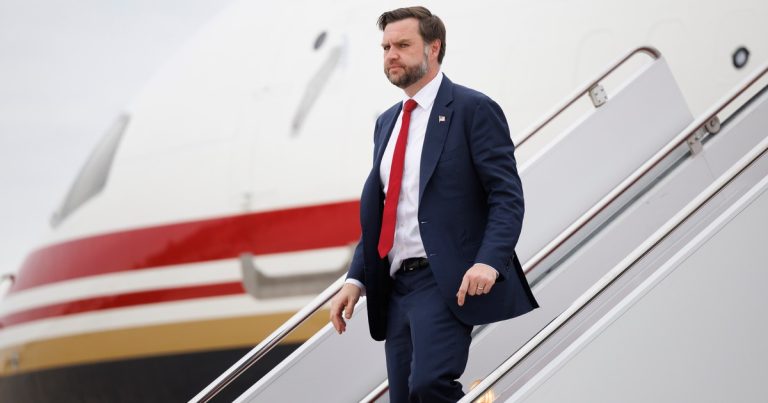
The findings challenge explanations offered by prominent Republicans after the election. Vice President JD Vance argued that turnout was not the primary problem, pointing instead to Trump voters who backed Democrats. Sen. Ted Cruz offered a similar argument and described the outcome as a “Watergate-level repudiation” of the GOP. The J.L. Partners findings put more weight on participation than those accounts did. That disagreement is consequential because the explanation Republicans accept will shape what they believe needs fixing before the next election.
James Johnson, J.L. Partners’ founding director, interpreted the results as something other than a rejection of the MAGA agenda or a demand for establishment Republicanism. His conclusion was that Republicans needed to bring their voters back to the polls. That is a more encouraging interpretation for the party than the idea that its coalition has fallen apart. It is still an interpretation, not proof that every absent Trump voter remains ready to support any Republican nominee. A supporter who stays home cannot simply be counted as a dependable vote waiting to be collected.
Trump’s absence from the ballot offers a possible explanation for the enthusiasm gap, but it is not a complete answer. RedState noted that the president repeatedly urged supporters to vote as though he were a midterm candidate. Those appeals did not prevent the turnout gap described in the poll. That suggests the party cannot assume a presidential endorsement or appeal will automatically transfer Trump’s electoral support to other candidates. Republicans have to make the case for the people actually running, rather than treating their connection to Trump as sufficient.
A MAGA Label Is Not an Economic Argument
The poll also found that the economy and cost of living were the top concerns across voter groups. That gives Republicans a substantive issue to address, not merely a turnout slogan to improve. Voters concerned about high prices need a reason to believe a Republican candidate can deliver relief. The findings do not establish which economic promises would have changed the outcome or how many absent voters could have been persuaded. They do support a straightforward political judgment: asking for loyalty is not a substitute for answering voters’ most pressing concerns.
For Republicans, the encouraging possibility is that a significant part of their presidential coalition did not move into the Democratic camp. The harder reality is that those voters did not help elect Republican candidates either. The practical challenge is to connect economic priorities, credible candidates and a reason to participate when Trump is not on the ballot. Neither dismissing the losses as a turnout fluke nor declaring the entire coalition finished captures the poll’s findings. The next test is whether Republicans can turn that diagnosis into an argument their absent voters find worth showing up for.
Source: RedState