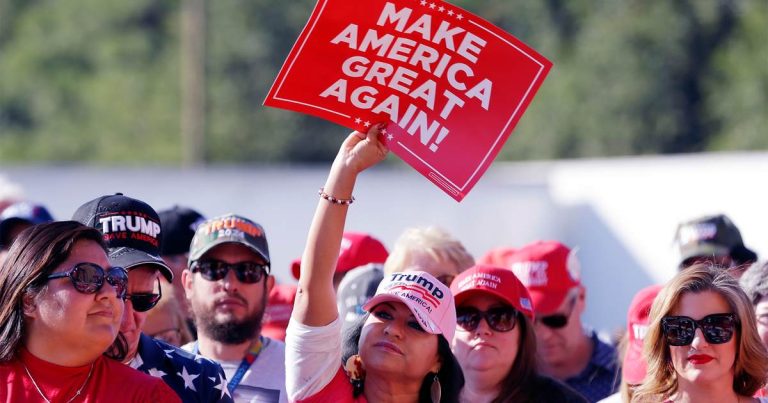
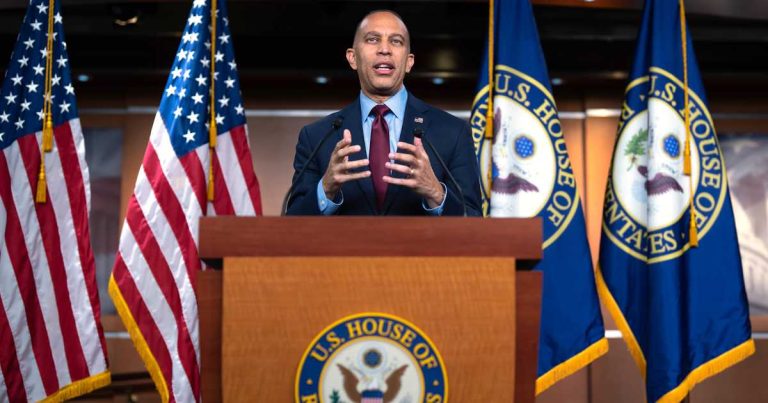
Donald Trump’s fractured Republican coalition is only part of the trouble facing the next presidential winner, according to RealClearPolitics election analyst Sean Trende. Beyond rebuilding a party or defending an election victory, the next president will face a Social Security funding crisis that Trende warns cannot simply be ignored. Speaking at the American Enterprise Institute on November 5, he paired a blunt assessment of Republican divisions with a warning about governing. His argument puts an uncomfortable limit on election-night celebrations: winning power does not make the decisions waiting in Washington any easier.
Townhall describes a punishing 2026 election for Republicans, reporting that Democrats secured at least 255 House seats and 56 in the Senate. Mississippi flipped blue and elected its first Black senator since Reconstruction, according to the account. Across numerous races, the article describes double-digit Democratic swings among groups broken down by race, gender, and age. Those results explain the immediate Republican concern about rebuilding an electoral coalition. But Trende’s warning reaches beyond the size of the defeat to the conflicting interests that could make recovery difficult.
Trump’s Coalition Has Competing Demands
Trende’s assessment is that Trump has alienated almost every part of the coalition that delivered his 2024 victory. That is the analyst’s judgment, not proof that every Republican voter has abandoned the president. The distinction matters because his argument concerns the difficulty of satisfying different Republican factions at once. A decision that reassures establishment suburban Republicans, he suggested, could infuriate MAGA supporters. Under those conditions, changing personnel or shifting direction is not necessarily a straightforward path back to party unity.
He used Pete Hegseth to illustrate the problem. In Trende’s telling, removing Hegseth could appeal to more establishment-minded Republicans who want someone with greater governing experience, while provoking MAGA voters who remain enthusiastic about him. Trende also pointed to a supportive social media post from Data Republican as an example of that enthusiasm. The larger point was about competing loyalties, not an announced personnel decision. Republicans looking for an easy reset must contend with the possibility that the same move can look like a correction to one faction and a betrayal to another.
Social Security Complicates the Comeback Story
Trende also cautioned against treating past election cycles as a dependable map for the next presidential contest. Townhall recalls the large Democratic majorities that followed the 2006 and 2008 elections, noting that Democrats at one point held 60 Senate votes. But Trende emphasized that the financial collapse helped shape the 2008 outcome. His objection was to assuming a similar electoral sequence would repeat without considering what produced it. Historical comparisons can offer perspective, but they do not rebuild a coalition or guarantee that voters will deliver the same result again.
The analyst’s sharper warning concerned what happens after the presidency is won. Trende said Social Security faces bankruptcy in 2032 and warned that doing nothing would mean a 20% across-the-board reduction in benefits. Those are his stated projections, and the remarks quoted by Townhall do not lay out the underlying financial calculations. Still, the political consequence he describes is clear: inaction would not preserve benefits unchanged. A president hoping to avoid an unpopular fight could instead face the consequences of allowing the problem to go unresolved.
That distinction makes the issue bigger than a Republican comeback strategy. Trende’s warning applies to whoever wins the presidency, regardless of which coalition gets that candidate into office. Campaign success and governing capacity are separate tests, particularly when the choices involve benefits people depend on. An election victory might give a party authority to act, but it does not automatically create agreement about what action to take. The challenge he identifies is whether a winning coalition can hold together when its members must accept difficult decisions rather than simply oppose the other side.
Neither Party Gets a Pass on Governing
Townhall’s Matt Vespa argues that neither party has shown the courage needed to put forward and advance serious solutions to the entitlement problem. That is the article’s criticism, rather than a detailed accounting of every proposal or negotiation. The account does not provide a specific rescue plan, a legislative timetable, or an agreement between the parties. It therefore offers no basis for declaring that either side has solved the problem. The fair accountability test is whether political leaders can explain their choices and their consequences, rather than merely promise to protect benefits.
For Republicans, the immediate task described by Trende is rebuilding enough trust to make a divided coalition function again. For Democrats, the reported congressional gains do not erase the governing challenge he places ahead of the next president. Neither electoral strength nor an opponent’s weakness answers the Social Security question. The unresolved issue is what either party would actually support when avoiding a decision carries consequences of its own. Trende’s warning is that the next presidential winner may inherit not just an opportunity to govern, but a difficult test that campaign slogans cannot settle.
Source: Townhall